
Key Takeaways
- Open a dedicated business account even as a sole proprietor or freelancer
- Online banks typically offer lower fees and higher interest rates
- Look for accounts with no monthly fees and free incoming wire transfers
Choosing the right business bank account is crucial for managing your company's finances efficiently. A business bank account separates personal and business finances, provides credibility with clients and vendors, and gives you access to business-specific features like higher transaction limits, merchant services, and business credit products.
The best business bank accounts offer low or no fees, useful digital tools, integration with accounting software, and features that help your business grow. With the rise of online-only banks, small businesses now have more competitive options than ever before.
Why You Need a Business Bank Account
Using a personal account for business transactions creates several problems:
- Legal Protection - Mixing funds can pierce the corporate veil of LLCs and corporations, exposing personal assets to business liabilities
- Tax Compliance - The IRS requires clear separation between personal and business finances for proper tax reporting
- Professional Image - Accepting payments under a business name looks more credible than a personal account
- Accounting Simplicity - Separate accounts make bookkeeping and tax preparation significantly easier
- Business Credit - Establishing a relationship with a bank is the foundation for business credit cards, loans, and lines of credit
Key Features to Look For
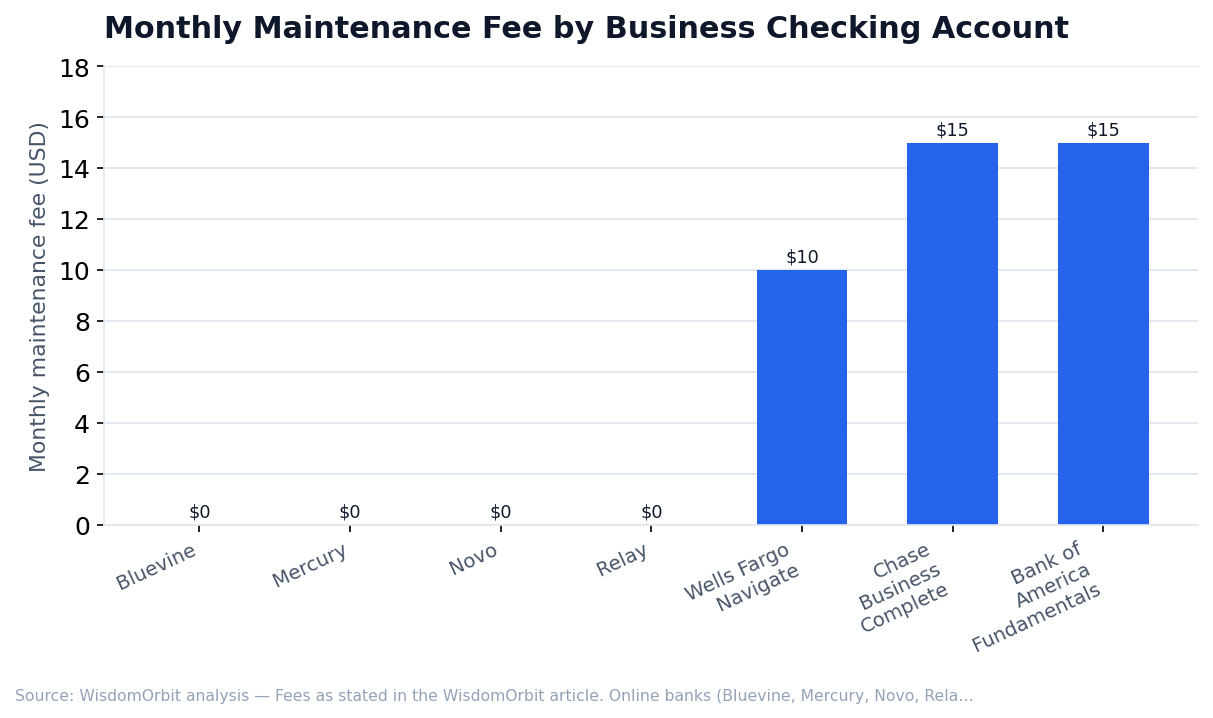
- Monthly Fees - Many banks now offer free business checking with no minimum balance requirements. Traditional banks often charge $10-30/month unless you maintain minimum balances.
- Transaction Limits - Free accounts may limit monthly transactions (deposits, withdrawals, transfers). Ensure the limit exceeds your typical monthly volume.
- Cash Deposit Options - If you handle cash, consider ATM deposit limits and branch accessibility. Online banks often partner with retailers for cash deposits.
- ATM Access - Large ATM networks reduce out-of-network fees. Some online banks reimburse ATM fees.
- Software Integration - Direct connections to QuickBooks, Xero, and other accounting software save hours of manual data entry.
- Interest Rates - High-yield business checking accounts now offer 1-4% APY on balances, turning idle cash into income.
- Mobile Banking - Quality mobile apps with mobile check deposit, real-time notifications, and easy transfers are essential.
- Payment Processing - Some banks offer integrated merchant services for accepting credit card payments.
Best Business Checking Accounts
Bluevine Business Checking
Bluevine stands out with an industry-leading 2% APY on balances up to $250,000 with no monthly fees or minimum balance requirements. The account includes unlimited transactions, free incoming wires, and excellent integration with accounting software. Bluevine also offers business lines of credit, making it a one-stop shop for growing businesses.
Best for: Businesses wanting to earn interest on operating cash while avoiding fees.
Mercury Business Banking
Mercury has become the go-to bank for startups and tech companies, offering a sleek interface, no fees, and features designed for modern businesses. You get unlimited transactions, free domestic wires, virtual and physical debit cards, and powerful API access for automated workflows. Mercury also offers checking, savings, and treasury products all in one platform.
Best for: Startups, tech companies, and businesses wanting modern digital banking.
Novo Business Checking
Novo offers free business checking with no minimums or hidden fees. The standout feature is their app marketplace integrating with Slack, Shopify, Stripe, and dozens of other business tools. Novo also provides invoicing tools and expense management built into the platform.
Best for: Small businesses wanting a free account with useful app integrations.
Chase Business Complete Banking
Chase offers the largest branch and ATM network in the US, making it ideal for businesses that need physical banking access. The Business Complete account offers 20,000 free ATMs, same-day deposits, and Chase QuickAccept for card payments through your phone. The $15 monthly fee is waived with a $2,000 minimum balance.
Best for: Businesses needing branch access and extensive ATM network.
Bank of America Business Advantage Fundamentals
Bank of America's entry-level business account offers 200 free transactions per month and no monthly fee with a $5,000 minimum balance (or $15/month without). The Preferred Rewards program provides benefits if you also have personal accounts with BofA. Strong cash management tools make it good for established businesses.
Best for: Established businesses with existing Bank of America relationships.
Wells Fargo Navigate Business Checking
Wells Fargo's business checking includes an extensive branch network and strong online/mobile banking. The Navigate account includes 100 free transactions with a $10 monthly fee (waived with $500 balance). Wells Fargo excels in business lending, making it a good choice if you anticipate needing SBA loans or commercial credit.
Best for: Businesses planning to apply for traditional bank loans.
Relay Business Banking
Relay offers unlimited free business checking accounts with no fees, no minimums, and no transaction limits. The unique feature is multiple checking accounts under one login, allowing you to organize funds by purpose (payroll, taxes, operations). Great for businesses practicing profit-first accounting.
Best for: Businesses wanting multiple accounts for financial organization.
Online-Only vs Traditional Banks
Online Banks Advantages
- No Monthly Fees - Most online banks offer completely free checking
- Higher Interest Rates - Lower overhead allows better rates (1-4% APY vs 0.01% at traditional banks)
- Better Technology - Modern apps, real-time notifications, API access
- Faster Account Opening - Often open accounts in minutes online
- Unlimited Transactions - No per-transaction fees
Online Banks Disadvantages
- No Physical Branches - Can't walk in to resolve issues
- Cash Handling Limitations - Cash deposits require partner networks
- Fewer Lending Products - May have limited business loan options
Traditional Banks Advantages
- Physical Branch Access - In-person service for complex issues
- Easy Cash Deposits - Deposit cash at any branch
- Comprehensive Lending - SBA loans, commercial mortgages, business credit cards
- Relationship Benefits - Better loan terms for existing customers
Traditional Banks Disadvantages
- Monthly Fees - Typically $10-30/month unless minimums met
- Transaction Limits - Fees after 100-200 transactions
- Negligible Interest - Typically 0.01% APY or less
- Slower Processes - Account opening can take days
Requirements to Open a Business Bank Account
Gather these documents before applying:
- EIN (Employer Identification Number) - Get free from IRS.gov in minutes. Sole proprietors can use SSN but EIN is recommended.
- Business Formation Documents - Articles of incorporation (corporations), articles of organization (LLCs), or DBA filing (sole proprietors)
- Operating Agreement/Bylaws - Required for LLCs and corporations to show who can access the account
- Personal Identification - Government-issued ID for all owners with 25%+ ownership
- Business License - If required in your industry or jurisdiction
- Initial Deposit - Some banks require $25-100 to open; many have no minimum
How to Choose the Right Business Bank
- Assess Cash Handling Needs - If you deposit cash daily, traditional banks are better. If cash is rare, online banks save money.
- Estimate Transaction Volume - High-volume businesses should prioritize unlimited transactions
- Consider Future Financing - If you'll need business loans, establishing a relationship with a traditional bank helps
- Check Integration Compatibility - Ensure the bank connects to your accounting software
- Compare Total Costs - Factor in monthly fees, transaction fees, wire fees, and ATM fees
Frequently Asked Questions
Can I use a personal account for my business?
Technically yes for sole proprietors, but it's not recommended. It creates legal, tax, and accounting complications. Most businesses should open a dedicated business account.
Do I need an EIN to open a business bank account?
Sole proprietors can use their Social Security Number, but corporations and LLCs need an EIN. Even sole proprietors benefit from an EIN for privacy and building business credit.
Can I have multiple business bank accounts?
Yes, and many businesses benefit from multiple accounts for different purposes (operating expenses, taxes, payroll, savings). Some banks like Relay are specifically designed for this.
How long does it take to open a business bank account?
Online banks often approve accounts in minutes to hours. Traditional banks may take 1-3 business days, and some require in-person visits.
Getting Started
Start by identifying whether you need physical banking services or can go fully digital. If cash handling isn't critical, online banks like Bluevine or Mercury offer the best combination of features and value. If you need branches and plan to pursue business loans, Chase or a regional bank may be better long-term partners.
You May Also Like

Sources & References
- FDIC – Federal Deposit Insurance Corporation – Bank account insurance and regulations
- U.S. Small Business Administration – Guidance on separating business and personal finances
- Consumer Financial Protection Bureau – Bank Account Resources
- Federal Reserve – Business banking statistics and trends
Related Articles
This article is for general information only and is not financial, legal, or tax advice. Verify current rates, fees, and terms with providers before making decisions.