

Key Takeaways
- Product research and niche selection matter more than the platform you choose
- Expect thin margins of 15-30%; volume and upsells drive profitability
- Test products with small ad budgets before committing to inventory or suppliers
Dropshipping is a retail fulfillment method where you don't keep products in stock. Instead, when a customer places an order on your online store, you purchase the item from a third-party supplier who ships it directly to the customer. This model lets you start an e-commerce business with minimal upfront investment - no warehouse, no inventory costs, and no need to handle products yourself.
The dropshipping industry has grown significantly, with the global market valued at over $200 billion. While competition has increased, the model remains viable for entrepreneurs willing to differentiate through branding, customer experience, or niche selection. Understanding both the opportunities and challenges helps you decide if dropshipping is right for your e-commerce ambitions.
How Dropshipping Works
The dropshipping process involves a simple three-party transaction between you (the retailer), the supplier (manufacturer or wholesaler), and the customer:
- Customer orders - A customer places an order on your online store and pays your retail price
- Order forwarded - You send order details to your supplier (automatically with most apps)
- Supplier ships - The supplier packages and ships the product directly to your customer
- You profit - You keep the difference between your retail price and the wholesale cost
For example, if you sell a product for $40 and your supplier charges $15 plus $5 shipping, your gross profit is $20 per sale (minus platform fees, payment processing, and advertising costs).
Pros and Cons of Dropshipping
Advantages
- Low Startup Costs - No inventory investment means you can launch with under $500. You only purchase products after making sales.
- Low Risk - Unlike traditional retail, you don't risk money on unsold inventory. Test products without financial commitment.
- Location Independence - Run your business from anywhere with an internet connection. No warehouse or office needed.
- Wide Product Selection - Offer thousands of products without stocking any. Test new products easily by adding listings.
- Scalability - Growth doesn't require proportionally more work. Suppliers handle increased order volume.
- Learning Opportunity - Great way to learn e-commerce fundamentals before investing in inventory-based business.
Challenges
- Lower Margins - Typical profit margins range from 15-30%, lower than traditional retail. Volume is necessary for significant income.
- Shipping Complexity - Products from different suppliers have different shipping times and costs. Customer orders with multiple items may arrive separately.
- Inventory Syncing - Supplier stockouts can result in canceled orders if your system doesn't update in real-time.
- Quality Control - You can't inspect products before they ship. Bad products reflect on your brand, not the supplier's.
- Competition - Low barriers to entry mean many people sell identical products, often competing on price.
- Customer Service Responsibility - You handle complaints and returns even though you never touched the product.
Steps to Start Your Dropshipping Business
1. Choose a Niche
Select a specific market segment rather than trying to sell everything to everyone. Successful niches balance several factors:
- Interest/Knowledge - You'll create better content and make smarter product decisions in areas you understand
- Market Demand - Verify people are actively searching for and buying these products
- Competition Level - Avoid markets dominated by Amazon or major retailers; find underserved segments
- Profit Margins - Target products with at least $20-30 margin to cover ads and still profit
- Shipping Friendly - Light, durable products ship cheaper and arrive undamaged
Research tools: Google Trends shows demand over time, Amazon Best Sellers reveals what's selling, and Facebook Audience Insights helps size potential markets.
2. Find Reliable Suppliers
Your supplier relationships determine product quality, shipping speed, and ultimately customer satisfaction. Popular supplier options include:
- AliExpress - Massive selection from Chinese manufacturers. Low prices but 2-4 week shipping to US/EU (improving with ePacket and warehouses). Best for testing products before committing.
- Spocket - Curated suppliers primarily from US and EU. Faster 2-5 day shipping but higher product costs. Integrates with Shopify and WooCommerce.
- CJ Dropshipping - Chinese supplier with US warehouse options. Competitive pricing with faster shipping than typical AliExpress orders.
- SaleHoo - Directory of verified wholesalers and dropship suppliers. One-time fee gives access to supplier database and market research tools.
- Wholesale2B - Integrated platform connecting to multiple suppliers. Handles order routing automatically.
- Printful/Printify - Print-on-demand for custom products (t-shirts, mugs, posters). Higher margins on unique designs.
3. Build Your Online Store
Choose an e-commerce platform to build your store. Each has different strengths:
- Shopify - Most popular for dropshipping. Clean interface, extensive app ecosystem (DSers, Oberlo alternatives), and reliable hosting. Starts at $29/month.
- WooCommerce - Free WordPress plugin with more customization options. Lower monthly costs but requires more technical setup. Best if you're comfortable with WordPress.
- BigCommerce - Built-in features reduce app dependency. Better for scaling to higher volumes. Starts at $29/month.
Whichever platform you choose, prioritize mobile-responsive design (most traffic is mobile), fast loading speeds, and a smooth checkout process.
4. Set Up Payment Processing
Accept payments through multiple methods to maximize conversions:
- Shopify Payments/Stripe - Credit and debit cards with 2.9% + 30¢ per transaction
- PayPal - Trusted by customers, especially for first-time purchases from unknown stores
- Shop Pay, Apple Pay, Google Pay - One-click checkout options that improve conversion rates
5. Market Your Store
Traffic is the lifeblood of any e-commerce business. Dropshipping stores typically rely heavily on paid advertising:
- Facebook/Instagram Ads - Visual products perform well. Target interests, behaviors, and lookalike audiences. Start with $20-50/day testing.
- TikTok Ads - Growing platform with younger demographic. Lower CPMs but requires video content.
- Google Shopping Ads - Capture search intent from people already looking for products. Higher conversion rates but more competitive.
- Influencer Marketing - Partner with micro-influencers for product posts. Often cheaper and more targeted than ads.
- Content Marketing/SEO - Blog posts targeting buyer keywords. Takes time but provides free long-term traffic.
- Email Marketing - Build a list from day one. Abandoned cart emails and promotions drive repeat sales.
Startup Costs Breakdown
- Shopify Basic Plan - $29/month (or annual discount)
- Domain Name - $10-15/year (get through Shopify or Namecheap)
- Theme - Free themes available; premium themes $150-350 one-time
- Essential Apps - $20-100/month (product sourcing, email marketing, reviews)
- Product Samples - $50-200 (always test before selling)
- Initial Ad Budget - $300-1,000+ (minimum to test and gather data)
- Total to Launch - $500-2,000 realistic minimum
Finding Winning Products
Product selection often determines success or failure. Characteristics of winning dropship products:
- Solves a problem - Practical products with clear benefits outperform novelties
- Not easily found locally - Unique or niche items people can't buy at Walmart
- Good margins - Aim for products you can sell at 3-4x supplier cost
- Lightweight - Shipping costs eat margins on heavy items
- Not fragile - Reduces returns and complaints
- Passionate market - Hobbyists, pet owners, and enthusiasts pay premiums
Tips for Dropshipping Success
- Order samples - Always test product quality, packaging, and shipping times yourself before selling
- Build a brand - Create a memorable store identity rather than a generic shop. Branded stores command higher prices and customer loyalty.
- Invest in customer service - Fast, helpful responses differentiate you from competitors. Use customer service as a competitive advantage.
- Start with few products - Focus on 5-10 products initially, then expand based on data
- Test ads systematically - Small budgets, multiple ad variations, kill losers fast
- Build email list immediately - Capture emails from first visitor. Email marketing is free traffic for repeat sales.
- Set realistic expectations - Most stores aren't profitable for 2-3 months. Plan for a learning curve.
Frequently Asked Questions
Is dropshipping still profitable?
Yes, though it's more competitive than years ago. Success requires differentiation through branding, customer experience, niche selection, or marketing expertise rather than just listing generic products.
How much can you make dropshipping?
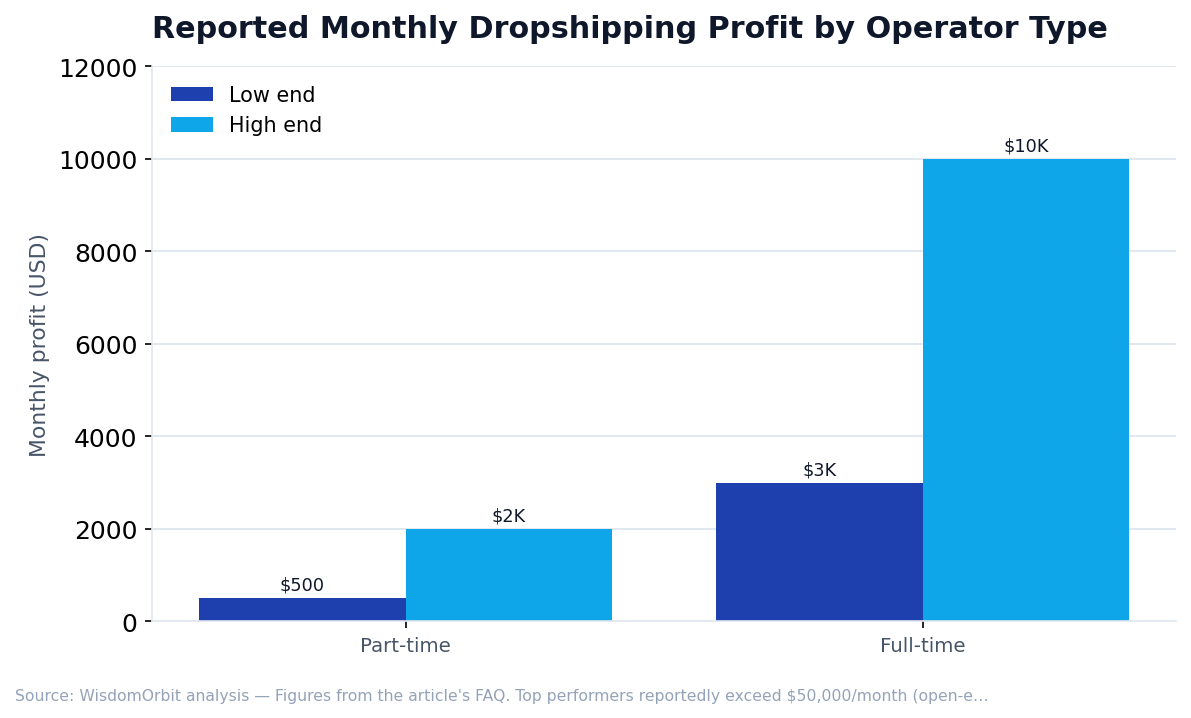
Income varies enormously. Many stores fail to profit. Successful part-time stores might make $500-2,000/month profit; full-time operators range from $3,000-10,000/month; top performers exceed $50,000/month. Your margins, traffic costs, and conversion rates determine results.
Is dropshipping legal?
Yes. It's a legitimate retail fulfillment method used by many businesses. Ensure you collect and remit sales tax where required, and avoid selling counterfeit or trademarked products.
Getting Started
Start by researching niches you find interesting and validating demand with Google Trends and competitor analysis. Sign up for Shopify's free trial to explore the platform. Join dropshipping communities to learn from others' experiences. Order samples from potential suppliers. Build your store, set up essential apps, and start testing ads with small budgets. Track everything, learn from failures, and iterate quickly. The path to profitability requires patience, testing, and continuous optimization.
Sources & References
- Federal Trade Commission (FTC) – Mail Order Rule – Shipping and fulfillment requirements
- U.S. Small Business Administration – E-commerce business guidance
- Shopify – E-commerce Industry Research
- Statista – Global e-commerce and dropshipping market statistics